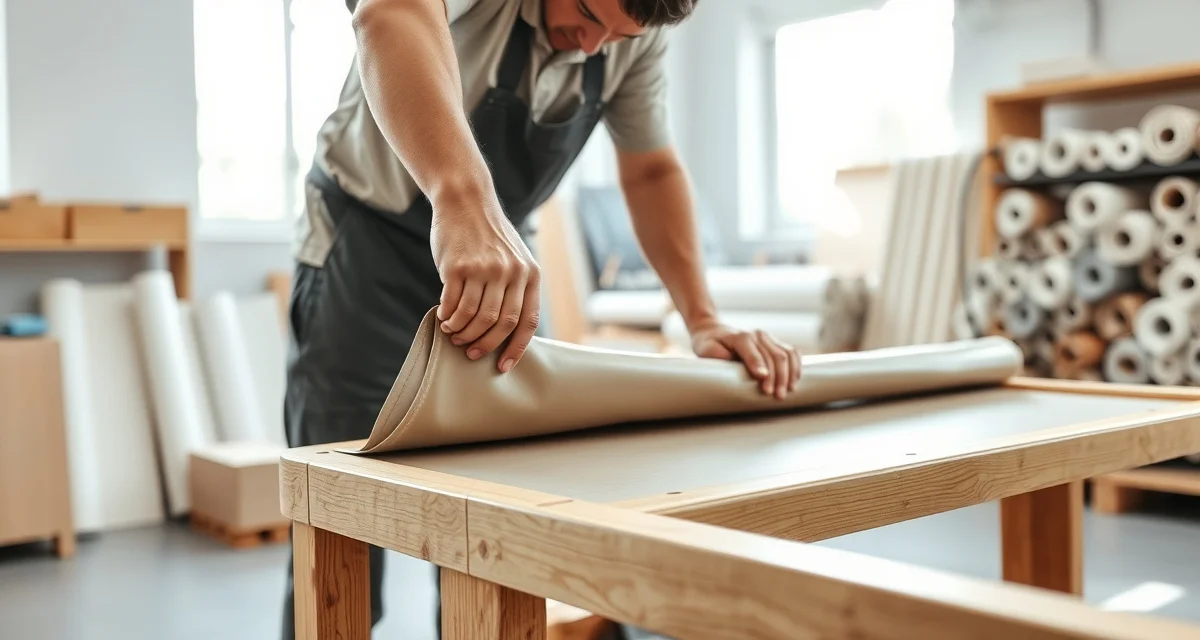
Vinyl Upholstery Guide
Vinyl is one of the workhorses of the upholstery trade. It dominates commercial food service applications, medical and healthcare furniture, marine upholstery, and a substantial share of residential high-traffic seating. Shops that understand vinyl's properties and installation requirements can handle these jobs efficiently and produce results that hold up in demanding use environments.
Types of Vinyl for Upholstery
Not all vinyl is the same, and the differences matter significantly for application selection and installation.
Fabric-backed vinyl: the most common type in upholstery. A PVC face layer bonded to a fabric backing (typically knit or woven polyester). The fabric backing adds dimensional stability, prevents the vinyl from stretching under stress, and improves durability. This is the appropriate vinyl for most furniture applications.
Knit-backed vinyl: flexible and conforming. The knit backing allows the vinyl to stretch, making it well-suited for tight applications on curved forms. Standard for automotive and marine seating.
Commercial-grade vinyl: heavier face weight, higher abrasion resistance, antimicrobial treatment. Double-rub counts typically 250,000-500,000+. Required for food service, healthcare, and hospitality applications. Suppliers include Spradling, Naugahyde (Uniroyal), Moore and Giles (vinyl), and others. These products have fire ratings, cleanability certifications, and antimicrobial certifications relevant to commercial and healthcare applications.
Marine vinyl: UV-stabilized and mold-resistant. Essential for any boat or outdoor application. Standard indoor vinyl will crack and discolor from UV exposure within a season outdoors.
Cutting Vinyl
Vinyl cuts cleanly with a sharp rotary cutter or shears. A rotary cutter is particularly efficient for straight cuts on vinyl because the material does not shift the way fabric does.
Mark cutting lines on the reverse (fabric side) with chalk or a marking pen. Marking on the face can leave permanent marks, particularly on matte-finish vinyl.
Avoid folding vinyl sharply during cutting and handling. A sharp fold can crease the face permanently, particularly on thinner or colder vinyl. Keep work at room temperature; cold vinyl becomes less flexible and more prone to crease damage.
Sewing Vinyl
Thread: use a heavy polyester or nylon thread, Tex 70 or heavier. Cotton thread degrades from vinyl off-gassing over time. UV-stabilized thread for marine vinyl.
Needle: use a size 18-20 needle. A cutting-point or wedge-point needle is designed for vinyl and leather; it cuts through the material rather than pushing fibers aside, producing cleaner perforations. Using a standard blunt-point needle on vinyl can cause skipped stitches or puckering at the seam.
Presser foot: a Teflon-coated presser foot or a roller foot prevents the vinyl face from sticking to the metal foot during sewing. Standard metal presser feet drag on vinyl, causing uneven feed and seam distortion.
Stitch length: use a longer stitch length on vinyl: 6-8 stitches per inch. Shorter stitches create more perforations per inch, which can reduce the seam's tear strength by perforating the material too densely.
Seam allowance: 1/2 inch minimum. For heavy commercial vinyl, 5/8 inch. Do not trim vinyl seam allowances narrower than 3/8 inch after sewing; the perforation from stitching reduces tear strength at the seam edge, and narrower allowances may tear through.
Adhesive Use in Vinyl Work
Contact cement is frequently used in vinyl upholstery to position seam allowances, to bond vinyl to foam or substrate, and to secure edges before stapling. Use a quality contact cement appropriate for vinyl (not all formulations bond vinyl well). Apply thin, even coats to both surfaces and allow to dry to tack before pressing together.
Test adhesive on a scrap before use, particularly with unfamiliar vinyl grades. Some vinyls do not bond well with specific adhesive formulations.
Stapling and Tacking Vinyl
Vinyl can be stapled in the same way as fabric, but requires slightly more care to avoid surface impressions. Use a properly adjusted pneumatic stapler with consistent depth; overdriven staples create visible surface impressions on vinyl that may show through on the face.
At corners, trim vinyl seam allowances carefully before folding to minimize bulk. Excess vinyl at corners creates visible lumps on the face that do not flatten over time the way fabric sometimes does.
Client Care Instructions
Vinyl care is straightforward compared to most fabric types:
- Wipe with a damp cloth for routine cleaning
- Use mild soap and water for stains
- For commercial/healthcare applications: compatible with healthcare-grade disinfectants (verify the specific product against the vinyl spec)
- Avoid petroleum-based products and harsh solvents, which degrade PVC
- For marine vinyl: UV protectant treatment extends life and prevents cracking
Document the vinyl specification on the work order in StitchDesk including the manufacturer, grade, and cleaning code. This information is relevant if the customer contacts you later with care questions or if a warranty issue arises.
See the commercial upholstery guide for commercial vinyl applications, and the fabric yardage calculator for yardage estimates on vinyl jobs.